







Everything About Tea

Everything About Tea

Although it may seem trivial, preparing a good tea cannot be completely improvised. There are certain parameters to respect to obtain an infusion allowing you to fully extract the quintessence of your tea: temperature and quality of the water, infusion time and dosage.

There are several methods for brewing tea. Here's a generic one, known as the 'Western' method, which allows to easily brew wonderful teas.

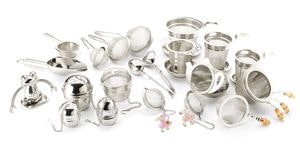
Choose a neutral-smelling teapot or cup and, wherever possible, use a large filter to allow the leaves to open unhindered. Count between 1.5 and 2 grams of tea per 2 dl, and brew in water with low limestone. For this, use filtered water.

Finally, to enjoy the perfect cup of tea, stick to the water temperature and brewing time indicated on the packet. Most teas can be brewed with boiling water. However, this is not the case for more delicate teas such as white or green teas, which we recommend to infuse at a maximum temperature of 70 degrees. Sometimes even lower - we recommend 60 degrees for Japanese green teas. Water that is too hot will 'burn' the leaves and create bitterness.

Good quality white, green, oolong and Pu-erh teas can be brewed several times, around 2 to 4 times depending on the tea and the quantity used.

For good quality loose leaf teas, especially with white, green, Oolong and Pu-erh teas, you can brew the same leafs several time. Follow the process desribed above, two to four times in the same half-day. Drain well between infusions. You will notice the evolution of the taste of the tea between the different brews, which each time reveals new facets of a great tea.

Other brewing techniques allow tea to be brewed several times. Often by making multiple very short infusions with lots of tea leaves in a small volume of water. This is particularly the case for Gong Fu Cha in China or Senchado in Japan.

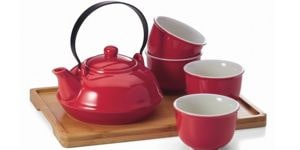
It is difficult to define the ideal teapot, it will depend on the tea chosen and your tastes. In general, a teapot that leaves room for the leaves to develop and is neutral in taste is preferred. Here is a quick overview of what we offer.

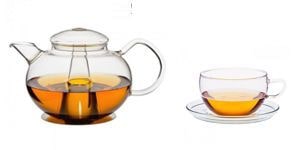
Mono teapots: these glass teapots are ideal for brewing all types of tea. Their very spacious filters allow the leaves to open and swim freely in the teapot. Made of glass, they have an elegant design which allows you to admire the color of the infusion.

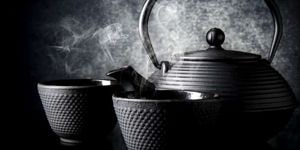
Cast iron teapots: These traditional teapots are equally suitable for all categories of tea. You can preheat the cast iron with boiling water before brewing if you want to keep your tea hot longer. We particularly recommend the fonts of the prestigious Wazuqu brand. The Japanese Foundry Masters have been in the same family for 15 generations and have guaranteed the quality of their teapots since 1604. In addition to their refined design, they are all enameled on the inside to protect against rust, and flow perfectly. Real jewels!

How to brew fruit tea depends on its composition. If your blend is tea-based (e.g. black tea with fruit), the water temperature is crucial.

FRUIT TEA BASED ON BLACK TEA

To properly brew black tea, use water at a temperature of approximately 95°C. Brewing should take three to five minutes to make the infusion intense but not overly tart.

FRUIT TEA BASED ON GREEN TEA

If your fruit tea has a green tea base, the water temperature should be 70–80°C, and brewing tea should not exceed 2–3 minutes

FRUIT TEA WITHOUT TEA LEAVES

To prepare dried fruit tea, pour hot water at a temperature of 95-98°C over itCover and steep for 6 to 8 minutes to bring out the natural sweetness of the fruit.

WHY NOT POUR BOILING WATER OVER TEA?

Too high a temperature can cause the delicate tea leaves to “burn,” causing the infusion to become bitter and lose its subtle flavor notes. Even in the case of a fruit mixture based solely on dried fruit (e.g. with the addition of hibiscus, rosehip or cranberry), boiling water is not the best ally.

The use of water at a temperature of 100°C causes so-called "thermal shock" in dried fruit. Instead of slowly releasing the essence, boiling water rapidly "closes" the fruit's structure, allowing mainly organic acids to pass into the water, making the drink too acidic. To preserve the vitamins and natural sweetness of the mango or pineapple, the water temperature should be slightly lower. The steeping time can be extended to up to 10 minutes to allow the fruit to fully release its aroma and flavor.

Back to categories

Did not find the answer to your question?

Megamenu
Compare0My wishlist0
Your cart
There are no more items in your cart